
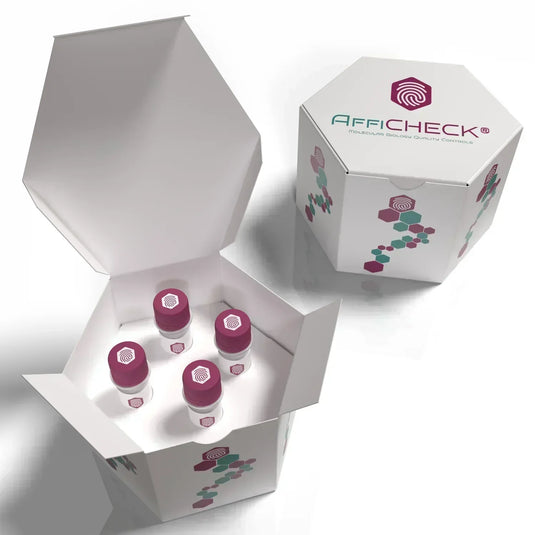
A DNA PCR Quantitative Positive Control is an essential reference material used in quantitative polymerase chain reaction (qPCR) and digital PCR (dPCR) workflows to validate assay performance, verify amplification efficiency, calibrate standard curves, and confirm target-specific detection. In molecular biology laboratories, clinical diagnostic units, and pathogen surveillance programs, positive controls ensure that DNA amplification, fluorescence detection, and copy number quantification operate within defined specifications.
This technical review provides a detailed explanation of composition, analytical function, reference calibration, regulatory relevance, and assay optimization steps, supported by authoritative academic and governmental resources.
Molecular Basis of PCR Quantitative Positive Controls
A quantitative positive control contains a known amount of target DNA sequence, often cloned, synthetic, plasmid-based, or linearized. The structure of PCR targets and amplification principles are widely described by the National Human Genome Research Institute (https://www.genome.gov) and the NIH DNA Learning Center (https://dnalc.cshl.edu).
PCR amplification depends on:
-
Template DNA structure
-
Primer–template annealing (see MIT Biology resources: https://biology.mit.edu)
-
DNA polymerase kinetics (NIH Enzyme Mechanisms: https://www.ncbi.nlm.nih.gov/books)
-
Reaction buffer composition (NIST chemical reference: https://www.nist.gov)
-
Magnesium ion concentration (University of Arizona Biochemistry: https://biochem.arizona.edu)
A well-designed positive control simulates natural target DNA while eliminating biosafety risks.
Quantification Principles and Reference Calibration
Quantitative controls provide absolute copy number or mass concentration enabling users to evaluate:
-
Standard curve linearity
-
Cq (Ct) consistency
-
Reaction efficiency (E%)
-
Analytical sensitivity (LOD95)
-
Reproducibility across instruments
For calibration theory, refer to:
-
CDC Laboratory Quality Process resources (https://www.cdc.gov/labquality)
-
FDA molecular diagnostics guidance (https://www.fda.gov/medical-devices)
-
NCBI qPCR quantification principles (https://www.ncbi.nlm.nih.gov/pmc)
-
USDA genomics standards (https://www.usda.gov)
The use of certified reference materials (CRMs) is documented by NIST (https://www.nist.gov/srm).
Analytical Performance Parameters Verified by Positive Controls
Positive controls are required to verify:
a. Amplification Efficiency
Must range from 90–110%, consistent with guidelines from the University of Nebraska Molecular Biology Program (https://biosci.unl.edu).
b. Limit of Detection (LoD)
LoD determination procedures are described by the EPA Analytical Methods Laboratory Program (https://www.epa.gov/measurements).
c. Specificity
Sequence alignment and primer specificity are usually evaluated using public resources like:
-
NCBI BLAST (https://blast.ncbi.nlm.nih.gov)
-
NLM GenBank (https://www.ncbi.nlm.nih.gov/genbank)
d. Reproducibility and Repeatability
NIH reproducibility guidelines: https://www.nih.gov/research-training/rigor-reproducibility
e. Inhibition Controls
PCR inhibitors are listed in academic sources like:
-
University of California Davis Forensic Biology (https://forensics.ucdavis.edu)
-
Oregon State University Microbiology (https://microbiology.oregonstate.edu)

Design Types of DNA PCR Quantitative Positive Controls
1. Plasmid DNA Controls
-
High stability
-
Easy to quantify by spectrophotometry
-
Documented in many university labs such as Stanford Genetics (https://genetics.stanford.edu)
2. Synthetic gBlocks / Fragment DNA Controls
-
Exact sequence fidelity
-
Optimized for pathogen detection assays
-
Referenced in NIH synthetic biology overviews (https://www.nih.gov)
3. Linearized DNA Controls
-
Mimic natural genomic context
-
Improved polymerase accessibility
-
Supported by educational resources from Harvard BioLabs (https://mcb.harvard.edu)
4. Armored DNA / Encapsidated Controls
-
RNase/DNase resistance
-
Used for infectious disease detection
-
More information available at CDC Virology FAQs (https://www.cdc.gov/virology)
Applications in Molecular Diagnostics and Pathogen Surveillance
A DNA PCR Quantitative Positive Control is used in:
a. Infectious Disease PCR Assays
Including:
-
Viral detection
-
Bacterial pathogens
-
Foodborne contaminants
Supported by USDA Food Safety (https://www.fsis.usda.gov) and FDA Molecular Diagnostics (https://www.fda.gov/medical-devices).
b. Environmental DNA (eDNA) Monitoring
Examples include waterborne pathogen surveillance (EPA Water Research: https://www.epa.gov/water-research).
c. Genetic Engineering and CRISPR Validation
For experimental verification, see:
-
Broad Institute CRISPR resources (https://www.broadinstitute.org)
-
NIH Genetics Home Reference (https://ghr.nlm.nih.gov)
d. qPCR Instrument Calibration
Instrument guidance from the National Institute of Standards and Technology (https://www.nist.gov/calibrations).
Stability, Storage, and Handling Parameters
DNA controls require storage at −20 °C or −80 °C depending on matrix type. Stability studies follow guidelines from:
-
FDA IVD Stability Testing (https://www.fda.gov)
-
CDC Biospecimen Storage Standards (https://www.cdc.gov/biospecimens)
Freeze-thaw cycles must be minimized. Many labs follow university standard operating procedures such as the University of Michigan Molecular Diagnostics SOPs (https://medicine.umich.edu).

Troubleshooting Using Quantitative Positive Controls
Problem: High Cq / Ct values
-
Check DNA integrity (NIH Genome Integrity: https://www.genome.gov)
-
Verify pipetting accuracy
Problem: No amplification
-
Possible polymerase failure
-
Inhibitor contamination (EPA inhibition guidelines: https://www.epa.gov)
Problem: Non-specific amplification
-
Redesign primers using NCBI Primer-BLAST (https://www.ncbi.nlm.nih.gov/tools/primer-blast)
Regulatory and Compliance Considerations
Several governmental bodies describe the importance of validated controls:
-
CDC CLIA regulations: https://www.cdc.gov/clia
-
EU/US laboratory testing standards
-
NIH biosafety guidelines: https://www.nih.gov/safety
-
FDA IVD regulatory framework: https://www.fda.gov/medical-devices
Positive controls support compliance, traceability, and accreditation for ISO 15189 and research-grade laboratories.
Conclusion
A DNA PCR Quantitative Positive Control is a critical component in molecular diagnostics, genomic research, pathogen detection, and quality-assured PCR workflows. Its role in verifying accuracy, quantification, efficiency, specificity, and sensitivity is essential for reliable data interpretation. Using well-characterized, stable, and traceable positive controls improves experimental robustness and ensures compliance with global laboratory standards.