
Introduction: Precision Protein Detection in Modern Cell Biology
Accurate protein quantification remains a cornerstone of molecular and cellular biology research. As scientists continue to explore membrane-associated regulatory proteins, members of the tetraspanin-like family have attracted increasing attention due to their involvement in intracellular trafficking, membrane organization, and signaling coordination.
Among these proteins, Transmembrane 4 L6 Family Member 20 (TM4SF20) has emerged as an important membrane protein associated with cellular processing pathways and protein maturation mechanisms. The TM4SF20 ELISA provides researchers with a reliable immunoassay method for quantitative measurement of TM4SF20 protein expression across experimental systems.
Enzyme-Linked Immunosorbent Assay (ELISA) technology remains one of the most standardized analytical approaches in laboratory science, as described by the National Institutes of Health (NIH):
and laboratory education resources from the Centers for Disease Control and Prevention (CDC):
https://www.cdc.gov/labtraining
What is Transmembrane 4 L6 Family Member 20 (TM4SF20)?
TM4SF20 is a multi-pass membrane protein belonging to the transmembrane 4 superfamily, characterized by four hydrophobic membrane-spanning domains. Proteins in this group participate in membrane compartment organization and protein processing regulation.
Authoritative gene and protein references include:
-
NCBI Gene Database (.gov):
https://www.ncbi.nlm.nih.gov/gene/79853 -
National Library of Medicine (.gov):
https://www.nlm.nih.gov -
UniProt Protein Knowledgebase:
https://www.uniprot.org
TM4SF20 has been studied particularly for its association with intracellular trafficking and regulation of protein maturation within cellular membrane systems.
Educational genomics resources:
https://www.genome.gov (.gov)
https://www.nigms.nih.gov (.gov)
Structural Characteristics of TM4SF20
TM4SF20 contains:
-
Four transmembrane helices
-
Cytoplasmic regulatory regions
-
Membrane-localization signals
-
Protein interaction interfaces
Membrane protein structures are documented within the Protein Data Bank (RCSB):
Educational structural biology materials:
https://pdb101.rcsb.org (.edu)
These structural features allow TM4SF20 to function as a membrane-associated regulatory component influencing protein transport pathways.
![AffiELISA® Human Transmembrane 4 L6 family member 20 ELISA [ TM4SF20]](https://affigen.com/cdn/shop/files/5BAFG-E4345_5D_20AffiELISA_C2_AE_20Cattle_20IFNg_20Kit_20High-Resolution_20Interferon_20Gamma_20ELISA_20Detection_3814d8eb-fec5-4648-9cd4-20d740a694b7_535x.png?v=1712857839)
Biological Roles of TM4SF20
1. Membrane Organization and Protein Trafficking
TM4SF20 participates in intracellular membrane dynamics, helping regulate protein localization and transport between cellular compartments.
Cell biology education portals:
https://cellbio.jhmi.edu (.edu)
https://medicine.yale.edu/cellbiology (.edu)
https://biology.mit.edu (.edu)
Understanding trafficking proteins supports research into:
-
vesicular transport mechanisms
-
endoplasmic reticulum processing
-
Golgi apparatus dynamics
2. Regulation of Protein Processing Pathways
Studies indicate TM4SF20 contributes to regulatory mechanisms controlling maturation and processing of specific membrane-associated proteins.
Research databases:
https://pubmed.ncbi.nlm.nih.gov (.gov)
https://www.ncbi.nlm.nih.gov/pmc (.gov)
Protein processing concepts are described by:
https://www.nigms.nih.gov (.gov)
3. Cellular Signaling Coordination
Membrane scaffold proteins like TM4SF20 help organize signaling complexes by spatially arranging interacting proteins within lipid bilayers.
Educational signaling resources:
https://www.signalingpathways.org (.gov)
https://bioengineering.stanford.edu (.edu)
https://engineering.berkeley.edu (.edu)
ELISA Technology for TM4SF20 Detection
Principle of ELISA
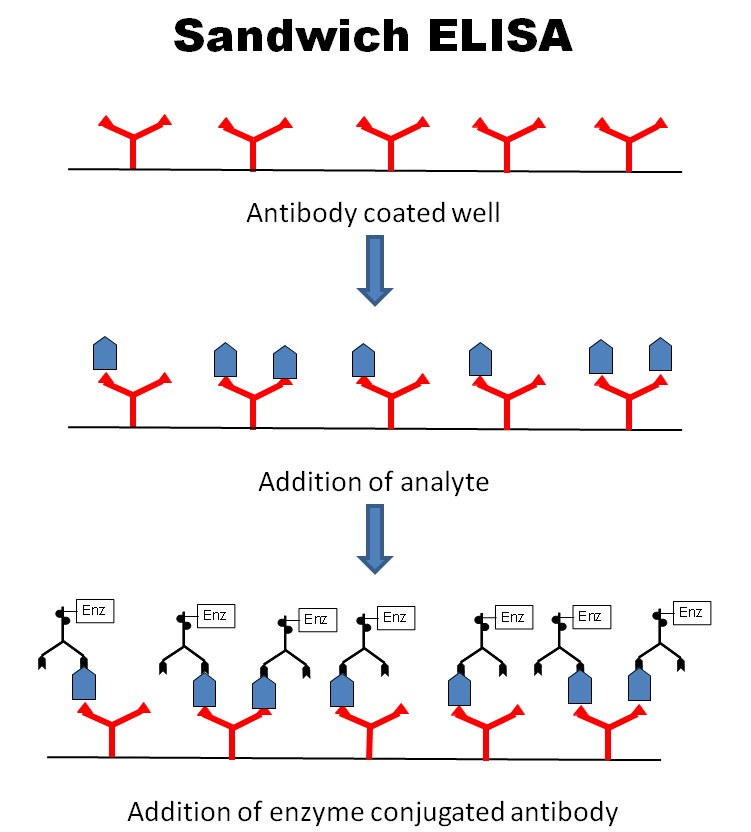
ELISA uses antigen–antibody recognition combined with enzymatic amplification to generate measurable signals proportional to protein concentration.
Authoritative learning resources:
https://www.fda.gov/science-research (.gov)
https://immunology.arizona.edu (.edu)
Sandwich ELISA Workflow
The TM4SF20 ELISA typically follows this workflow:
-
Capture antibody immobilization
-
Sample incubation
-
TM4SF20 antigen binding
-
Detection antibody addition
-
Enzyme conjugation
-
Substrate conversion producing colorimetric signal
-
Optical density measurement
Training resources:
https://www.biotech.wisc.edu (.edu)
https://www.purdue.edu (.edu)
Why Quantify TM4SF20?
Quantification enables researchers to evaluate protein expression dynamics under controlled experimental conditions.
Common research questions:
-
How does TM4SF20 expression vary across cell models?
-
How do membrane trafficking processes influence protein abundance?
-
What experimental treatments alter TM4SF20 levels?
Experimental methodology guidance:
https://oir.nih.gov (.gov)
Applications of TM4SF20 ELISA
Cellular Transport Research
Investigation of protein movement across intracellular compartments.
https://www.washington.edu (.edu)
Membrane Biology Studies
Understanding protein localization within lipid bilayers.
https://hms.harvard.edu (.edu)
Molecular Pathway Analysis
Quantitative measurement supporting signaling pathway studies.
https://med.stanford.edu (.edu)
Systems Biology Research
Integration with proteomics and transcriptomics workflows.
https://sysbio.harvard.edu (.edu)
Compatible Sample Types
TM4SF20 ELISA is commonly applied to:
-
cell lysates
-
tissue homogenates
-
experimental protein extracts
-
cultured cell systems
Sample preparation education:
https://www.nature.com/scitable (.edu resource)
Advantages of TM4SF20 ELISA
✅ High analytical specificity
✅ Quantitative reproducibility
✅ Standardized protocol design
✅ Microplate reader compatibility
✅ Suitable for high-throughput studies
Laboratory standardization references:
https://www.nist.gov (.gov)
Data Analysis and Interpretation
ELISA data analysis involves:
-
standard curve construction
-
regression modeling
-
concentration interpolation
Statistics education:
https://statistics.stanford.edu (.edu)
Research Trends Involving TM4SF20
Increasing interest surrounds membrane regulatory proteins and intracellular trafficking networks.
Literature exploration:
https://pubmed.ncbi.nlm.nih.gov (.gov)
Emerging topics include:
-
membrane protein maturation
-
intracellular transport regulation
-
signaling compartmentalization
Integrating TM4SF20 ELISA into Experimental Workflows
Typical workflow:
-
Experimental design
-
Protein extraction
-
ELISA quantification
-
Data normalization
-
Comparative analysis
NIH training resources:
https://training.nih.gov (.gov)
-
TM4SF20 ELISA kit
-
Transmembrane 4 L6 family member 20 assay
-
TM4SF20 protein quantification
-
membrane protein ELISA
-
TM4SF20 detection assay
-
intracellular trafficking protein measurement
-
quantitative ELISA TM4SF20
Importance of Standardized Immunoassays
Validated immunoassays enable reproducible biological measurements across laboratories worldwide.
Scientific infrastructure resources:
https://www.nsf.gov (.gov)
https://www.energy.gov/science (.gov)
ELISA remains a foundational quantitative method in experimental biology.
Future Perspectives
Research into membrane-associated regulatory proteins continues to expand alongside advances in systems biology and proteomics.
Educational resources:
https://www.caltech.edu (.edu)
https://pme.uchicago.edu (.edu)
Quantitative assays such as TM4SF20 ELISA support deeper understanding of cellular organization and molecular coordination.
Conclusion
The Transmembrane 4 L6 Family Member 20 (TM4SF20) ELISA provides researchers with a robust and reliable platform for quantitative detection of TM4SF20 protein expression. Supporting investigations into membrane biology, intracellular trafficking, and signaling coordination, this assay enables reproducible experimental analysis aligned with modern molecular research standards.
By combining antibody specificity with standardized ELISA methodology, TM4SF20 quantification becomes accessible, scalable, and suitable for diverse experimental workflows.