
Introduction to Androstenedione and Quantitative Hormone Measurement
Steroid hormones play a central role in regulating metabolic activity, cellular differentiation, and endocrine signaling pathways. Among these steroid intermediates, androstenedione is a key precursor in the biosynthesis of testosterone and estrone. Accurate quantification of androstenedione is essential in experimental endocrinology, reproductive biology, metabolic research, and steroidogenesis studies.
The Androstenedione ELISA is a sensitive immunoassay designed for quantitative measurement of androstenedione concentrations in biological samples such as serum, plasma, cell culture supernatants, and experimental matrices. As steroid hormone research expands across molecular biology and physiology laboratories, ELISA-based quantification remains a widely adopted analytical method.
Educational overviews of steroid hormone biosynthesis are available from the National Center for Biotechnology Information (NCBI)
https://www.ncbi.nlm.nih.gov/
Comprehensive endocrine system resources are provided by the National Institute of Diabetes and Digestive and Kidney Diseases (NIDDK)
https://www.niddk.nih.gov/
Additional hormone pathway information can be found via the National Institutes of Health (NIH)
https://www.nih.gov/
What Is Androstenedione?
Androstenedione is a steroid hormone synthesized primarily in the adrenal glands and gonadal tissues. It functions as a biochemical precursor to:
-
Testosterone
-
Estrone
-
Estradiol
Steroidogenesis pathways are described in academic endocrinology programs such as:
-
Harvard Medical School Endocrinology Resources: https://hms.harvard.edu/
-
Stanford School of Medicine: https://med.stanford.edu/
-
University of Michigan Endocrinology: https://medicine.umich.edu/
-
University of Washington Department of Physiology: https://physiology.washington.edu/
-
Yale School of Medicine: https://medicine.yale.edu/
Detailed molecular pathway data are available through the Kyoto Encyclopedia of Genes and Genomes (KEGG)
https://www.genome.jp/kegg/
What Is an Androstenedione ELISA?
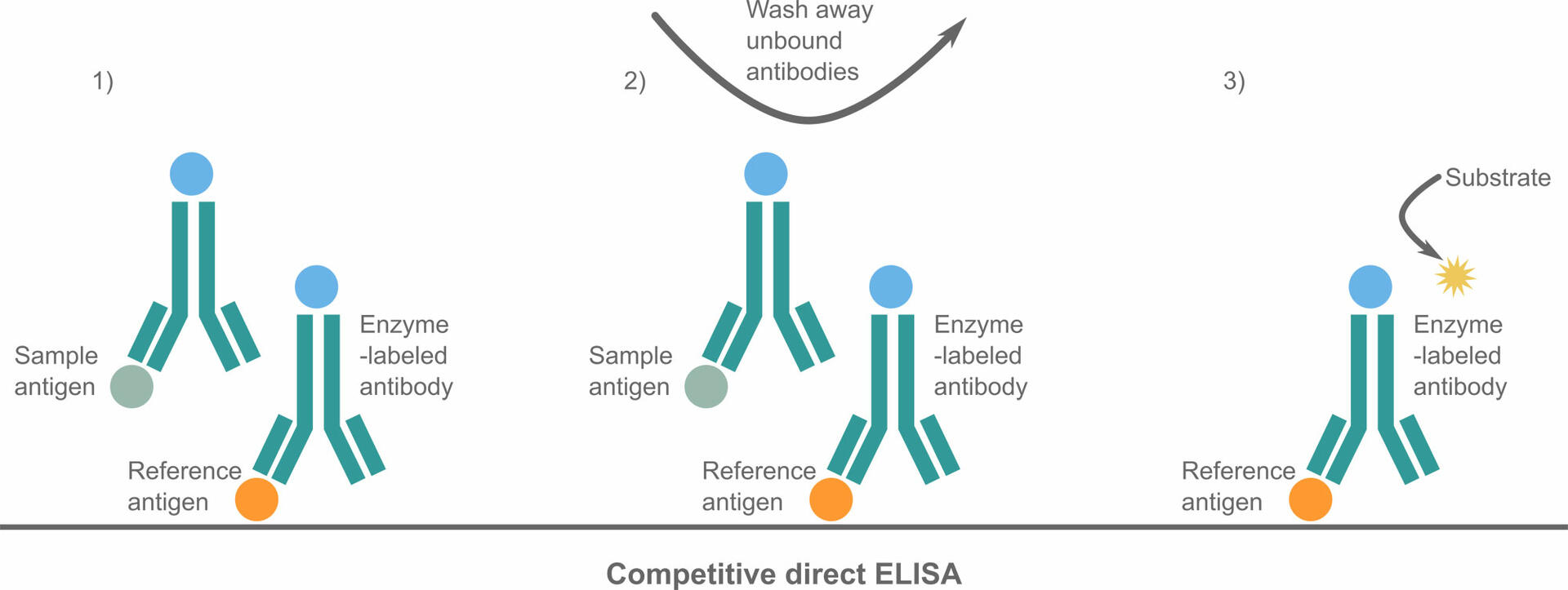
An Androstenedione ELISA kit is a competitive enzyme-linked immunosorbent assay specifically developed to detect and quantify androstenedione concentrations with high specificity and analytical sensitivity.
Because androstenedione is a small steroid molecule, competitive ELISA formats are typically used. ELISA methodology is described in laboratory training resources from:
-
University of California, San Diego (UCSD): https://biology.ucsd.edu/
-
University of Colorado Boulder Biochemistry: https://www.colorado.edu/biochemistry/
-
Cold Spring Harbor Laboratory: https://www.cshl.edu/
-
National Institute of Standards and Technology (NIST): https://www.nist.gov/

Principle of Competitive Androstenedione ELISA
The assay typically follows these steps:
1. Antibody Binding
Microplate wells are coated with an antibody specific to androstenedione.
2. Competitive Reaction
Sample androstenedione competes with enzyme-labeled androstenedione conjugate for antibody binding sites.
3. Washing Step
Unbound materials are removed to ensure assay specificity.
4. Substrate Reaction
Enzyme substrate conversion produces a color signal.
5. Signal Interpretation
Because the assay is competitive, signal intensity is inversely proportional to androstenedione concentration.
Standard immunoassay validation practices are described by:
-
National Institute of General Medical Sciences (NIGMS): https://www.nigms.nih.gov/
-
Centers for Disease Control and Prevention (CDC) Laboratory Quality: https://www.cdc.gov/labquality/
-
NIH Office of Research Infrastructure Programs: https://orip.nih.gov/
Research Applications of Androstenedione ELISA
1. Endocrine Physiology Studies
Quantitative steroid profiling supports research in hormone regulation and biosynthetic pathway analysis.
Resources:
National Institute of Child Health and Human Development (NICHD)
https://www.nichd.nih.gov/
2. Reproductive Biology Research
Steroid intermediates are widely studied in reproductive system modeling.
University-based programs:
https://reproductivehealth.harvard.edu/
https://med.stanford.edu/womenshealth.html
3. Metabolic Research
Steroid metabolism intersects with lipid metabolism and energy regulation.
National Institute of Environmental Health Sciences (NIEHS)
https://www.niehs.nih.gov/
4. Adrenal Function Studies
Adrenal steroid synthesis pathways are documented by the National Library of Medicine (NLM)
https://www.nlm.nih.gov/
5. Cell Culture Hormone Secretion Models
ELISA enables measurement of hormone production in in vitro experimental systems.
Biotechnology guidance:
University of Wisconsin Biotechnology Center
https://biotech.wisc.edu/
Advantages of Androstenedione ELISA
Compared with chromatographic techniques such as LC-MS/MS, ELISA offers:
-
High throughput screening capability
-
Simplified workflow
-
Cost efficiency for large sample sets
-
No need for complex instrumentation
-
Quantitative reproducibility
Assay standardization principles are outlined by:
-
NIH Reproducibility Initiative: https://grants.nih.gov/
-
National Science Foundation (NSF) BIO Directorate: https://www.nsf.gov/bio/
Sample Types Compatible with Androstenedione ELISA
-
Serum
-
Plasma
-
Cell culture media
-
Experimental biological fluids
-
Research animal samples
Guidance on biological sample handling can be found at:
-
OSHA Laboratory Safety: https://www.osha.gov/laboratory-safety
-
NIH Biosafety Guidelines: https://osp.od.nih.gov/biotechnology/
Data Analysis and Quantification
Results are calculated using a standard curve and typically expressed in:
-
ng/mL
-
nmol/L
Statistical and analytical guidance resources:
-
National Institute of Statistical Sciences: https://www.niss.org/
-
NIH Biostatistics Resources: https://www.nhlbi.nih.gov/
-
U.S. Department of Energy Office of Science: https://science.osti.gov/
-
Androstenedione ELISA kit
-
steroid hormone quantification assay
-
competitive ELISA hormone test
-
endocrine research immunoassay
-
quantitative androstenedione analysis
-
laboratory hormone detection kit
-
steroid biosynthesis research tool
-
high sensitivity ELISA
These terms align with high-volume search queries related to hormone research and immunoassay technology.
Best Laboratory Practices for Reliable Results
✔ Perform duplicate or triplicate measurements
✔ Prepare fresh standard curves
✔ Avoid cross-contamination
✔ Use calibrated pipettes
✔ Follow consistent incubation timing
Quality control documentation is supported by:
-
National Institute of Standards and Technology (NIST): https://www.nist.gov/
-
CDC Quality Management Systems: https://www.cdc.gov/labquality/
Expanding Role of ELISA in Hormone Research
While advanced analytical techniques continue to evolve, ELISA remains one of the most accessible and scalable methods for steroid hormone measurement. In large-scale experimental studies, ELISA provides robust quantitative data suitable for comparative analysis and mechanistic exploration.
Research infrastructure programs from:
-
NIH Common Fund: https://commonfund.nih.gov/
-
National Cancer Institute (NCI): https://www.cancer.gov/
highlight the importance of reliable biomolecular quantification tools in advancing scientific discovery.
Conclusion
The Androstenedione ELISA is a precise and scalable quantitative immunoassay designed to support endocrine and steroidogenesis research. Its competitive format ensures accurate measurement of small steroid molecules while maintaining laboratory efficiency and reproducibility.
For laboratories investigating hormone biosynthesis pathways, adrenal physiology, reproductive biology, or metabolic signaling, the Androstenedione ELISA provides a dependable solution for quantitative analysis within research workflows.