
Polymerase Chain Reaction (PCR) is one of the most powerful tools in molecular diagnostics, revolutionizing the detection of genetic material across numerous fields, from medical diagnostics to forensic analysis. With its vast application range, from detecting pathogens to identifying genetic disorders, ensuring the accuracy and reliability of PCR results is of paramount importance. One critical aspect of maintaining PCR quality is through External Quality Control (EQC), a process that plays a significant role in validating the performance of PCR assays.

What is PCR External Quality Control?
External Quality Control in PCR refers to the practice of verifying the accuracy, consistency, and reproducibility of PCR assays by comparing the results obtained from one laboratory against those from an external reference or control source. Unlike internal controls, which are built into the assay itself, external controls are independent and provide an unbiased check on the assay’s performance. These controls help laboratories ensure that their results are accurate, reproducible, and compliant with regulatory standards.
For example, the CDC often uses external controls in its disease surveillance programs to validate laboratory results across multiple sites. The purpose of EQC is to ensure that laboratory tests can reliably detect the target genetic material and produce reproducible results.
The Importance of External Quality Control in PCR Testing
-
Ensuring Consistent and Accurate Results
The main role of external quality control in PCR is to ensure that test results are both consistent and accurate. Using external controls allows laboratories to compare their results against a known, standardized reference, which can help in detecting issues like contamination, poor sample handling, or suboptimal reagent quality. The FDA recommends the use of external controls in PCR-based diagnostics to maintain the highest level of precision and reliability. -
Verification of Test Sensitivity and Specificity
PCR assays must be sensitive enough to detect low concentrations of the target nucleic acids and specific enough to differentiate the target from other genetic material. External quality control samples, often composed of spiked DNA or RNA, allow for the assessment of the assay’s sensitivity and specificity. This is particularly important for detecting rare genetic markers or pathogens. For instance, the NIH suggests that EQC programs should include sensitivity and specificity testing to ensure PCR assays are performing optimally. -
Compliance with Regulatory Requirements
Regulatory bodies like the FDA and the WHO mandate the use of external quality control for diagnostic tests. Regular participation in external quality control programs ensures that laboratories are compliant with these regulatory standards and helps them achieve necessary certifications. External quality control also aids in meeting Good Laboratory Practice (GLP) and Good Manufacturing Practice (GMP) standards, which are essential for obtaining approvals for PCR-based diagnostic kits. -
Enhancing Laboratory Confidence
EQC helps enhance laboratory confidence in their PCR assays by providing an independent verification of the results. By comparing internal results with external benchmarks, laboratories can identify potential biases or errors in their testing process. This allows for early intervention and troubleshooting. The CDC emphasizes that confidence in diagnostic tests is critical, especially when results influence treatment decisions or epidemiological monitoring.
How External Quality Control Works in PCR
External Quality Control is typically carried out through inter-laboratory comparison programs or proficiency testing. The following steps illustrate how EQC is implemented:
-
Provision of Blind Samples
In proficiency testing programs, laboratories receive samples from an external organization, often in a blinded format, meaning the laboratory is unaware of the contents. These samples are designed to mimic real-world specimens and can include both negative and positive controls. The laboratory performs its standard PCR protocol and reports the results back to the external agency. -
Comparison with Benchmark Data
The results from different laboratories are compared against a reference or benchmark data set. This comparison helps to assess the consistency and accuracy of the PCR assay. In many cases, the WHO provides the necessary reference standards for specific diagnostic tests, such as those used for infectious diseases. -
Evaluation of Performance
The external agency evaluates the performance of each laboratory based on how closely their results match the benchmark data. Laboratories that consistently perform poorly may be required to undergo corrective actions, such as improving their assay protocols or recalibrating their equipment. -
Feedback and Corrective Action
Laboratories receive feedback on their performance and are informed if any discrepancies were identified. This feedback is crucial for continuous improvement. The FDA and NIH both stress the importance of incorporating feedback from proficiency testing programs to identify areas for improvement and maintain the quality of PCR-based assays.
Components of a Successful PCR External Quality Control Program
-
Regular Participation in Proficiency Testing
Proficiency testing is the cornerstone of an external quality control program. Laboratories should regularly participate in inter-laboratory comparison programs to evaluate their PCR assays’ performance. Programs are often organized by regulatory bodies like the FDA or private entities that specialize in proficiency testing. Regular participation ensures that laboratories stay up-to-date with the latest diagnostic standards. -
Standard Operating Procedures (SOPs)
To ensure the effectiveness of EQC, laboratories must have well-established standard operating procedures (SOPs) in place for their PCR assays. These procedures should be regularly reviewed and updated to ensure they align with best practices and regulatory guidelines. NIST offers resources on developing and maintaining SOPs for molecular diagnostics. -
Training and Calibration
Laboratory staff must be adequately trained to handle proficiency testing samples and interpret results correctly. Routine calibration of PCR equipment, such as thermocyclers, is essential to maintaining assay performance. The CDC recommends regular calibration as part of a quality control program to ensure accurate results. -
Error Detection and Root Cause Analysis
An essential part of EQC is identifying the root causes of any discrepancies between the laboratory’s results and the reference standards. Error detection can involve investigating factors such as reagent quality, sample contamination, or equipment malfunctions. The FDA and NIH both highlight the need for comprehensive error-tracking and resolution procedures to ensure that issues are promptly addressed.
Benefits of External Quality Control for PCR
-
Improved Test Reliability
External quality control ensures that PCR assays consistently deliver reliable results. By validating the testing process with external controls, laboratories can avoid errors that might otherwise go unnoticed. The CDC explains that high-quality PCR testing is crucial for disease surveillance and epidemiological studies. -
Early Identification of Systemic Issues
EQC helps detect problems early, before they lead to widespread errors. Whether it’s due to reagent quality, equipment malfunction, or laboratory technique, early identification ensures that corrective actions can be taken swiftly. The NIH underscores the importance of early error detection in maintaining high-quality diagnostic testing. -
Ensures Regulatory Compliance
Regular participation in external quality control programs helps laboratories stay compliant with local and international regulations. Regulatory bodies like the FDA and WHO require evidence of external quality control participation as part of their certification and accreditation processes.
Challenges in Implementing PCR External Quality Control
-
High Costs
One of the primary challenges with PCR external quality control is the cost. Participating in proficiency testing and purchasing external controls can be expensive, particularly for smaller laboratories. However, programs offered by organizations like the WHO and CDC may offer financial assistance or lower-cost options for laboratories in low-resource settings. -
Standardization Issues
Despite efforts to standardize external quality control practices, variations in sample handling, reagent preparation, and testing protocols can still lead to discrepancies in results. The NIST is actively working to address these issues through the development of universal standards for molecular diagnostics. -
Data Management
Managing the data generated from proficiency testing programs can be complex, especially for laboratories that participate in multiple EQC programs. Laboratories need robust data management systems to track their performance over time and ensure that corrective actions are taken when needed.
Conclusion
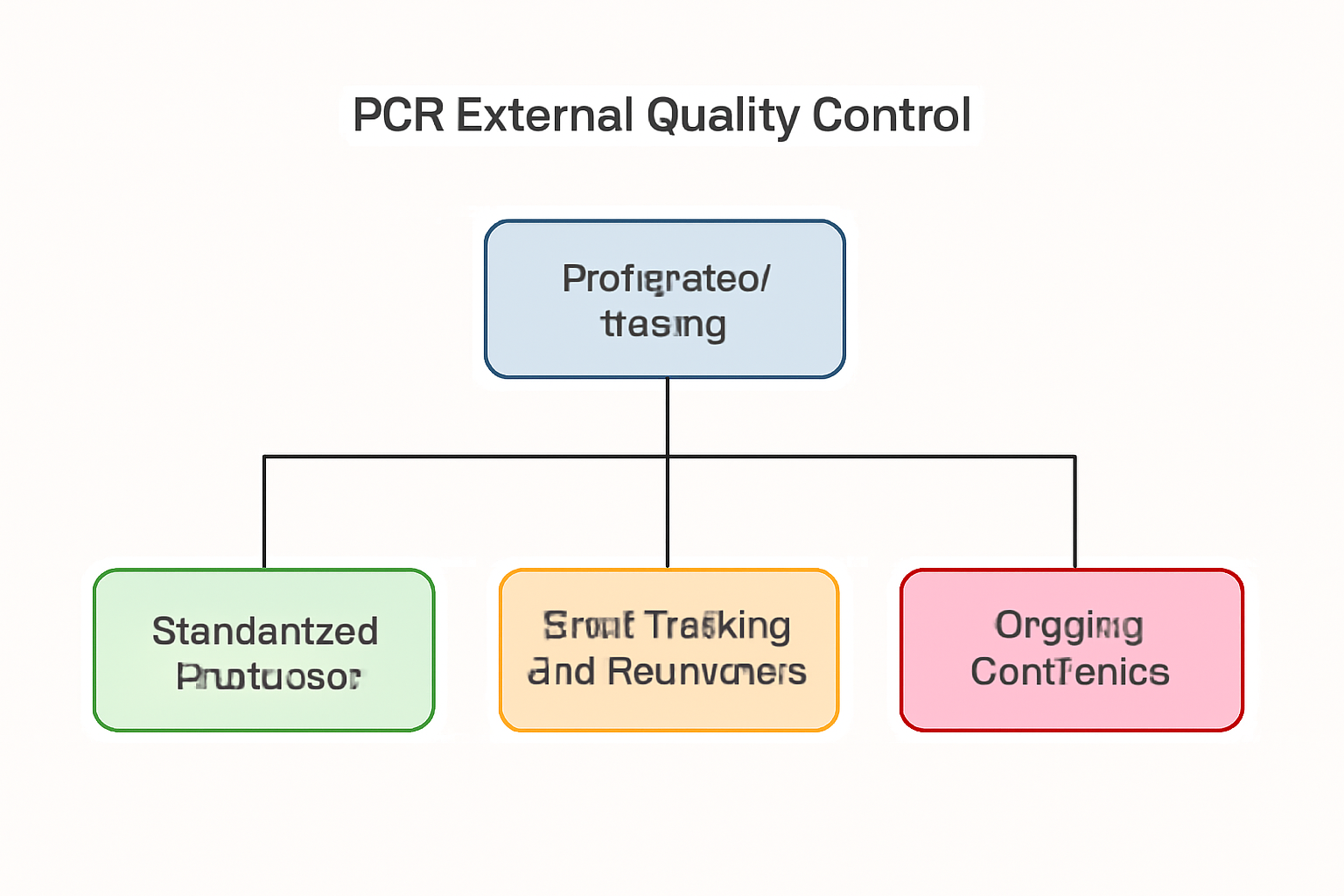
External Quality Control is essential to ensuring the accuracy, reliability, and reproducibility of PCR assays. It allows laboratories to meet regulatory standards, detect issues early, and improve test performance. By implementing proficiency testing, standard operating procedures, and continuous calibration, laboratories can enhance their diagnostic capabilities and ensure they produce consistent, high-quality PCR results.
For more information on PCR quality control and best practices, visit resources from the NIH, FDA, and CDC.