
Introduction: The Importance of RNase Inhibitors in RNA-Based Applications
The RNase Inhibitor ELISA Kit is an essential diagnostic tool in the field of molecular biology, offering a highly sensitive and specific method for detecting and quantifying RNase inhibitors. These proteins are vital for preserving RNA integrity in biological samples, making this kit an indispensable tool in a wide array of research applications, including RNA extraction, RT-PCR, and RNA sequencing.
RNase inhibitors play a crucial role in preventing the degradation of RNA by RNases, which are ubiquitous enzymes found in nearly all biological systems. Their application ensures that RNA remains stable and intact, even during rigorous experimental processes. For instance, RNA integrity is fundamental to the accuracy of downstream applications, including quantitative PCR (qPCR) and RNA-Seq, which are used for gene expression studies and biomarker discovery. This kit has been optimized to address the growing demand for accurate and reproducible measurements of RNase inhibitors in diverse experimental setups.
What Is an RNase Inhibitor and Why Is It Important?
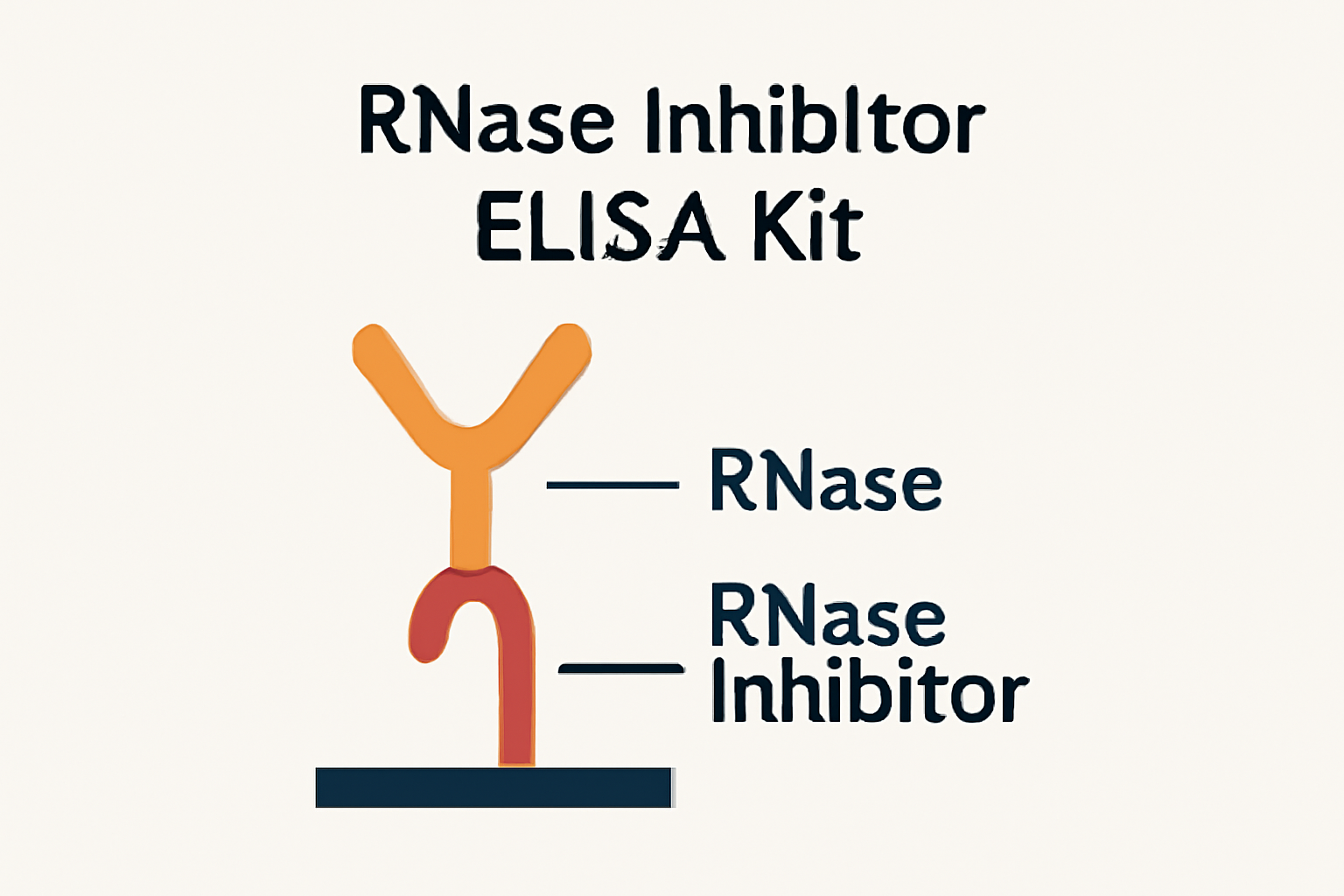
RNase inhibitors are specialized proteins that bind to and neutralize RNases, thus preventing the degradation of RNA molecules. They are typically used in experiments that involve RNA manipulation, where the integrity of the RNA is critical for accurate results. Without RNase inhibitors, RNA molecules can be rapidly degraded, compromising the integrity of experiments.
The Role of RNase Inhibitors in RNA Research
RNA plays a crucial role in many biological processes, and the degradation of RNA by RNases is a significant challenge in molecular biology. Therefore, the use of RNase inhibitors is essential for the following:
-
RNA Extraction: During the extraction of RNA from biological samples, RNases are often released, which can degrade the RNA if not inhibited. RNase inhibitors prevent this degradation, ensuring high-quality RNA for downstream applications.
-
RT-PCR: Reverse transcription polymerase chain reaction (RT-PCR) relies on intact RNA templates. RNase inhibitors ensure the reverse transcription step proceeds without the risk of RNA degradation.
-
RNA-Seq: In RNA sequencing, RNA degradation can result in inaccurate gene expression profiles. RNase inhibitors are routinely used to maintain RNA integrity throughout the entire sequencing process.
For more in-depth information on RNA research and the role of RNases, visit resources such as NIH’s Guide on RNA Extraction and Stanford’s RNA-Seq Overview.
Technical Overview of the RNase Inhibitor ELISA Kit
How the ELISA Kit Works
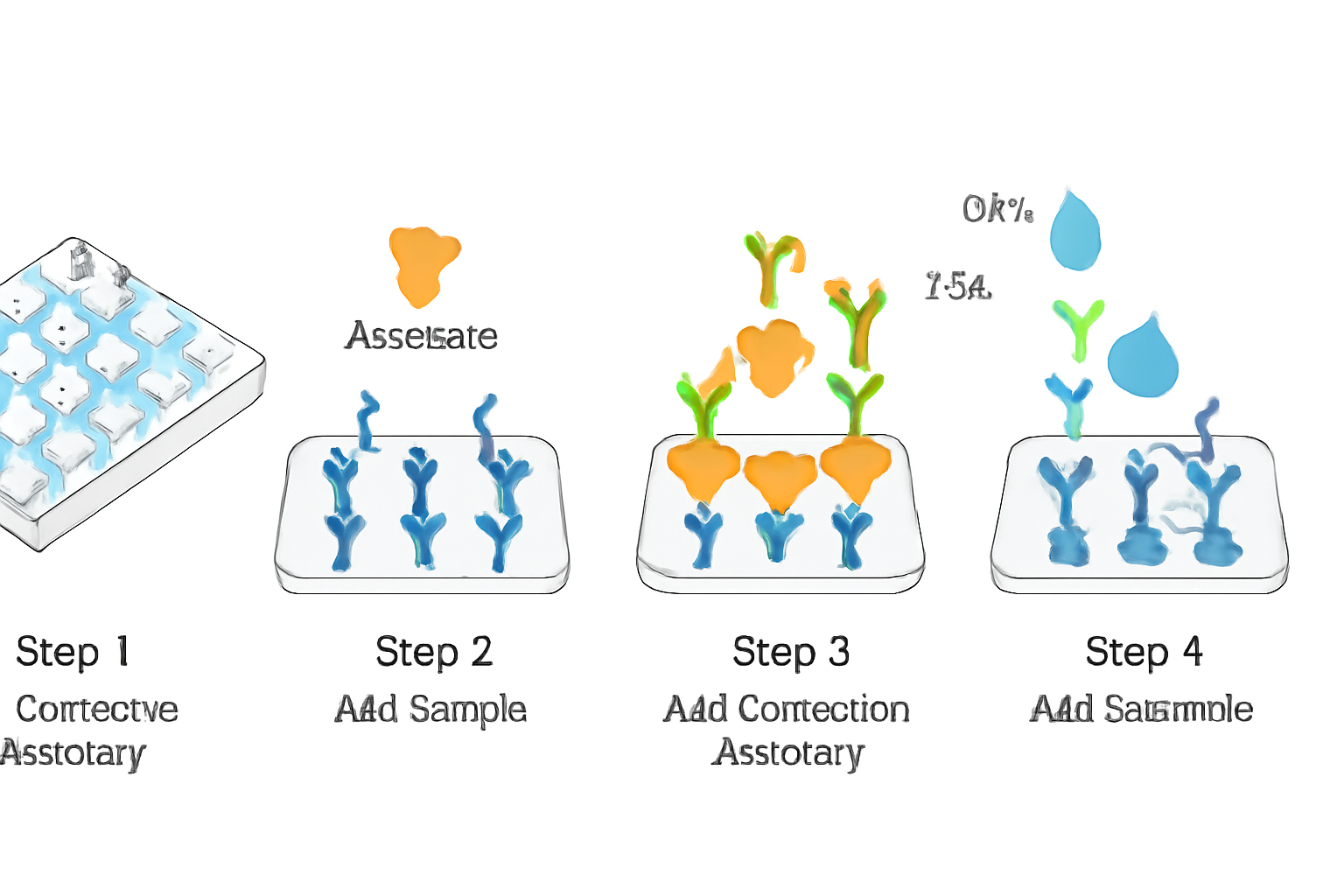
The RNase Inhibitor ELISA Kit employs a sandwich ELISA format, which involves the use of two specific antibodies to detect and quantify RNase inhibitors in biological samples. The kit works by binding the RNase inhibitors to a pre-coated microplate that contains capture antibodies specific to RNase inhibitors. After incubation, the bound inhibitors are detected using an enzyme-conjugated detection antibody that generates a colorimetric signal. The intensity of the color produced is directly proportional to the amount of RNase inhibitor present in the sample.
Key Features of the Kit
-
High Sensitivity: Capable of detecting RNase inhibitors as low as 10 pg/mL.
-
Wide Range of Sample Types: Works with serum, plasma, cell culture supernatants, and tissue lysates.
-
Fast and Simple Protocol: Results can be obtained within 3 hours, making it ideal for high-throughput analysis.
-
Validated in Multiple Platforms: Compatible with 96-well plates and automated systems for large-scale applications.
For information on the general principles of ELISA, visit the FDA ELISA Manual.

Applications of the RNase Inhibitor ELISA Kit
1. RNA Integrity in RNA Extraction
RNase inhibitors are crucial during RNA isolation to prevent degradation by RNases. The RNase Inhibitor ELISA Kit is used to validate the effectiveness of RNase inhibitors in RNA extraction kits. Researchers at Stanford University and NCBI recommend using RNase inhibitors to ensure high-quality RNA for downstream applications like RT-PCR and RNA-Seq.
2. Recombinant Protein Production
In the field of recombinant biotechnology, RNase inhibitors are commonly used to stabilize RNA in in vitro transcription reactions. By quantifying the activity of RNase inhibitors, the kit provides insight into the purity and activity of recombinant proteins used in pharmaceutical and diagnostic applications. Learn more about protein production at NCBI Biotechnology.
3. Gene Expression Analysis
For gene expression studies involving RNA, RNase inhibitors prevent RNA degradation during RT-PCR and RNA-Seq processes. This ensures accurate amplification of mRNA for gene expression profiling. Check out the NIH guide on gene expression analysis.
Sensitivity and Limit of Detection (LOD)
Standard Curve Example
A typical standard curve for the RNase Inhibitor ELISA Kit includes a dilution series of a known RNase inhibitor standard. The relationship between the concentration (pg/mL) and the optical density (OD450) is plotted to generate a linear curve with an R² value of 0.99 or higher. This ensures that even low concentrations of RNase inhibitors can be accurately measured.
For a more detailed explanation of standard curves in ELISA assays, refer to the NIH ELISA Protocols.
Application in RNA Quality Control for RNA-Seq
Role in RNA Sequencing
In RNA sequencing applications, the stability of RNA is paramount. RNase inhibitors are added to RNA samples to prevent degradation before sequencing. This ensures that the RNA is preserved in its original form, leading to more accurate sequencing results.
The RNase Inhibitor ELISA Kit is used in RNA quality control to verify the amount of RNase inhibitor present during RNA extraction, ensuring the protection of RNA through the sequencing process. More about RNA-Seq can be found at NCBI RNA-Seq.
Troubleshooting Guide for RNase Inhibitor ELISA Kit
| Problem | Cause | Solution |
|---|---|---|
| High background signal | Incomplete washing or excess antibody | Increase washing time, reduce antibody concentration |
| Low signal | Inadequate sample preparation | Ensure correct sample volume and concentration |
| Inconsistent results | Contamination or improper reagent storage | Recheck storage conditions and validate reagent batches |
For additional troubleshooting tips, consult the FDA Bioanalytical Method Validation Guide.
 Compliance and Safety
-
ISO 13485 Certified: Ensuring consistency in performance and quality.
-
FDA and CE Compliance: Compliant with regulatory requirements for clinical research.
For information on regulatory standards for laboratory kits, visit the FDA’s Biotech Guidance.
Conclusion
The RNase Inhibitor ELISA Kit is an essential tool for researchers working with RNA, providing a reliable and reproducible method for detecting and quantifying RNase inhibitors. Its application in RNA extraction, recombinant protein production, RNA sequencing, and gene expression studies makes it indispensable in molecular biology research.
For more detailed information on the RNase Inhibitor ELISA Kit, including ordering instructions and technical support, visit the following links: